
Complex contagion and collective deliberation have operated hand in hand to mobilize the people of Iran toward a unified opposition movement. Looking back at the long history of the opposition movement, multiple voices and ideas have been active, each reflecting different attitudes toward change and alternative futures. Many of these currents, however, lacked a clear and practical agenda, as well as a sustainable and robust base of support.
Over time, the public gradually coalesced around a single viable alternative: the former crown prince Reza Pahlavi. He articulated a structured transition plan, known as the Iran Prosperity Project, and consistently communicated a practical, simple, and unambiguous objective: the dismantling of the Islamic regime and the transition to a secular democratic system.
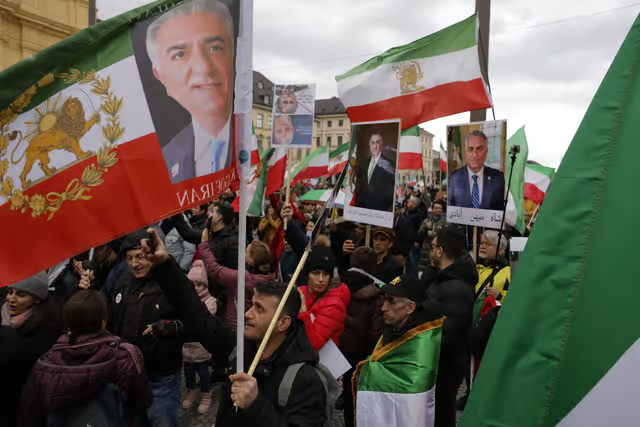
In recent weeks, concerns and criticisms regarding his platform and some of his supporters have surfaced, generating moments of polarization and internal conflict within the opposition. Yet despite these tensions, two powerful forces continued to unify the public. First, complex contagion facilitated the spread of beliefs and behaviors as individuals observed the growing support among friends, family members, and social connections. This process operated through normative pressures within close social circles and through the increasing visibility of public support, both online and in the streets.
Simultaneously, an ongoing process of collective deliberation unfolded. People actively debated opposition strategies, post-regime plans, and the suitability of leadership. These discussions emerged across digital platforms and offline settings, including workplaces, schools, and private gatherings. Through repeated exposure to arguments and justifications, uncertainty gradually diminished. Many individuals also deferred judgment to trusted others who had examined alternatives in depth and articulated coherent reasoning for a viable collective strategy.
What we observe today is mass mobilization resulting from this cumulative social process. Individuals with diverse political orientations are now aligned in both message and leadership. The movement has crossed a critical threshold, beyond which further questioning or persuasion is no longer necessary to sustain momentum.

The avalanche is now in motion. A shared sense of hope has emerged at the end of a long and painful tunnel. To freedom, dignity, and democracy. Today, I honor courage and collective intelligence. Today marks the dawn of freedom in the Middle East.
January 8th, 2026 – Charlottesville, Virginia


